
How two EU projects turned 340 Ghanaian students into entrepreneurs
Thirteen products sat on the tables inside Kwadaso Agricultural College’s exhibition hall on 15 June 2026. The products ranged from plantain flour and cassava biscuits to fufu, gari mix, and rice porridge. Every one of them was built, priced, and pitched by the person standing behind the table. Four months earlier, most of them had nothing but an idea.
According to the official programme report, co-authored by Dr. Ishak Shaibu, Vice Principal of Kwadaso Agricultural College, and Prof. Awunyo-Vitor Dadsosn, Provost at KNUST, more than 340 students went through that transformation between March and June 2026.
Two projects, one goal
CINOP runs ATCG Ghana, while MSM runs VET Ghana. Different funding, different mandates, both under the EU Erasmus+ umbrella, both aimed at the same thing. Stronger agricultural vocational education in Ghana.
Instead of duplicating the same entrepreneurship activity twice, the two projects split the work for this cohort. ATCG Ghana’s piece covered Work Packages 2, 3, and 4 of its plan. VET Ghana used the programme to push its own entrepreneurship and employability targets. CINOP Ghana handled the actual implementation, together with Bunash Enterprise and Farms, KNUST, and the rest of the consortium.
From idea to exhibition floor
Six to ten students per team, mixed by gender. Five stages between them and a finished product.
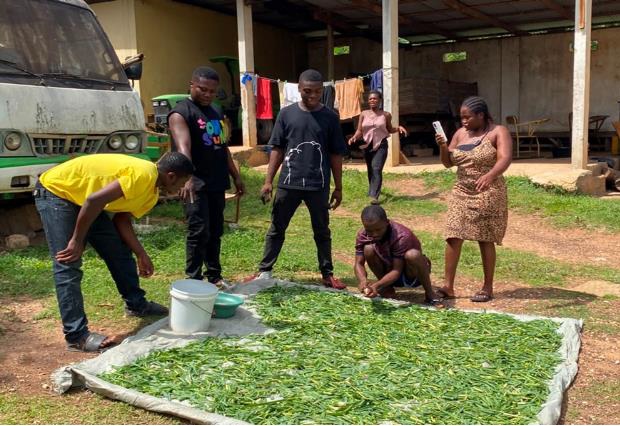
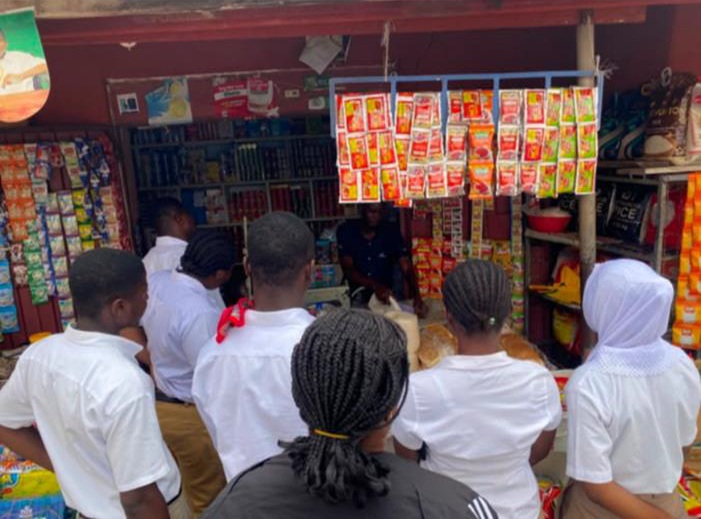
First, they had to find something worth building: a gap somewhere in Ghana’s agricultural sector, whether that meant food processing, organic products, climate-smart farming, agro-inputs, or sustainable packaging. Then came the uncomfortable part. Leaving the classroom to ask farmers, traders, and retailers whether they’d actually hand over money for it.
Whatever survived that conversation turned into a full business plan: market analysis, a production plan, financial projections, risk assessment, all coached along by facilitators from both projects. After the plan came the product itself, sourced, produced, packaged, branded, and tested for quality under conditions that weren’t staged for a classroom.
All of it built toward that afternoon in June, when the tables filled up inside Kwadaso’s hall.
What made it to the table
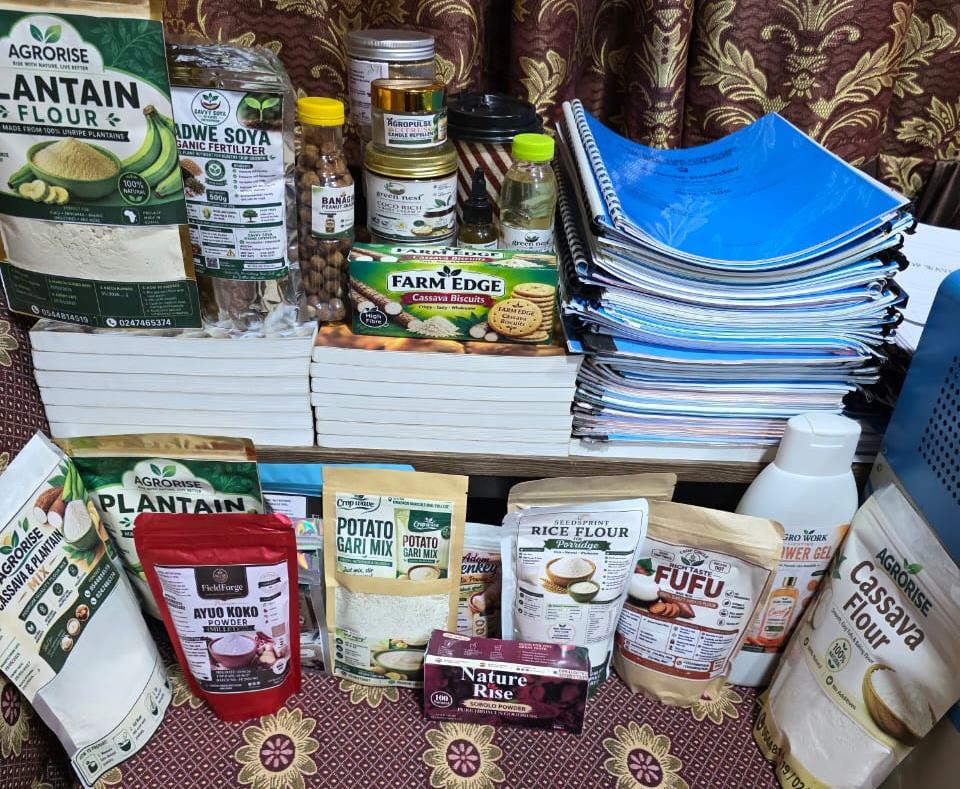
Agrorise’s plantain and cassava flours stood next to Adwe Soya and Farm Edge’s cassava biscuits. Potato Gari Mix and Rice Flour Porridge shared table space with Fufu and Ayigbe Koko. Nature Rise and Agropeak brought their own product lines. Crop Crafters showed a fruity mix, Agro Fields brought tomato mix powders, and there was CocoVita and Ginger Cake besides.
None of it came from a supplier. All of it came from a student team that had spent four months arguing over whether it would sell.
The judging wasn’t soft
Agribusiness entrepreneurs, business developers, and industry professionals sat on the panel. Every team had to explain the problem it was solving, argue why its product beat the alternatives, and defend the numbers behind market potential and financial viability.
Innovation and product quality got scored first. Then came branding, packaging, financial feasibility, scalability, teamwork, and whatever social or environmental impact a team could point to. Judges didn’t just hand out numbers, they gave feedback the students could actually use afterward.
More than a product
Some of what these students learned doesn’t show up on a shelf. Negotiating with a trader who has no reason to say yes. Defending a budget in front of a judge who has no reason to be gentle about it. That’s where leadership and financial management actually got tested, not in a workbook.
Mixed-gender teams weren’t a footnote here. They were the whole structure from day one. Female students took active roles in leadership, product development, and pitching throughout the programme. This is exaclty the direction ATCG Ghana said it wants to push too. To give women and vulnerable groups more opportunities in Ghana’s agricultural sector.
What happens next
ATCG Ghana has established the Employment and Incubation Centre, while VET Ghana is building the Career Development Center. Both exist for the same reason, a pitch competition ends in an afternoon, but a business doesn’t. Whether that holds up will show in what these 340 students are still running a year from now, not in what they pitched on 15 June 2026.

